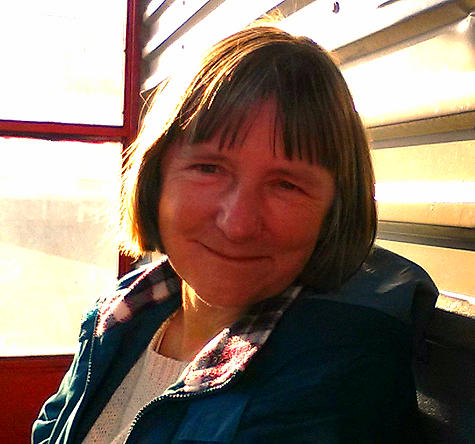
Rosalie Warren looks at books and related things. Things I'm reading, things I'm writing, and, just lately, things I'm publishing. Generally my outlook is positive, but I may indulge in the occasional grouch.
Tuesday, 15 September 2015
Today's the day 'Lena's Nest' hits the electronic shelves!
Yes, the long-awaited (well, by me at least) day of publication of Lena's Nest has arrived. I'll be anxiously watching my Amazon page for the magical change in rankings showing that some wonderful person has bought my book. It's only £1.99 by the way ($3.02 if you're ordering from Amazon.com). If you feel in need of an exciting new read, please go to Amazon UK or Amazon USA to obtain your copy. (You can read this e-book version on your Kindle, tablet, phone or laptop. The paperback version will be coming soon.) One reviewer has already described Lena's Nest as 'terrifyingly exquisite'. See if you agree.
Lena's Nest is science fiction, which is a new genre for me as a writer, though I've been a fan for years. It's 'hard' scifi in that it's based on real science; real knowledge of computers and artificial intelligence (AI). But the science isn't blasted in your face; a lot of it's behind the scenes. And there aren't any warring planets or sophisticated weaponry. There are no aliens either - just different kinds of human beings.
The main story is Lena's. She's a roboticist and also a mother - and when she ends up 90 years ahead of her time, her main objective is to search for traces of her children. Are they still alive? Does she have grandchildren and great-grandchildren? Or have her descendants been wiped out in the conflict fifty years before? (OK, there is some conflict - in fact there's been a war - but we don't witness it first hand.) Lena's own research - or the lack of it, in some areas - may have helped cause that war. She will have to face the consequences of her work, as well as coming to terms with a very different kind of life in 2104.
I have a background in AI and computer science, and this book reflects some of my concerns about developments in these fields - in particular the ethics of research. I'm pleased to see that such topics are beginning to make the news and even the drama slots - e.g. the recent Channel 4 series 'Humans' and the programme on BBC1 last night 'Could a Robot do my Job?' Radio 4 also has a lot of interesting stuff about computing and AI at the moment, including the reading of Ada Lovelace's letters (Ada was the first computer programmer and yay, she was a girl!)
One of the things that concerns me is that if we succeed in developing robots with thoughts and feelings, i.e. ones that are capable of happiness, sadness, pain and all the rest, will we treat them fairly and with consideration, kindness and respect? Some people fear what robots might do to us. My fear is what we might do to them. We don't have a great record as human beings for treating people we regard as 'different' or 'other' with kindness and respect (dreadful phrases like 'swarms of migrants' come to mind, but don't get me started on that).
These are some of the issues that Lena's Nest explores. Others include the vexed questions 'Who am I? Where exactly does my consciousness reside? What makes me me? If someone stored my brain in digital form, would that still be me? What if they copied it? What rights would that individual (or those individuals) have?' The lawyers will enjoy themselves, for sure - but these are issues that need to be thought about by all of us, ahead of time.
Some argue that a computer or a robot - something non-biological - can never be conscious. But the arguments are far from conclusive either way. I believe it could happen, and it may happen sooner than we expect. Ordinary people, not just scientists, need to start thinking about these things.
Just click here (UK purchasers) or here (Amazon.com purchasers) to obtain your copy of Lena's Nest. If you have Amazon Unlimited, it's free!
Best wishes
Ros
My website
My Facebook author page
Lena's Nest Facebook page
Follow me on Twitter @Ros_Warren
Tuesday, 25 August 2015
Alan Turing, Marital Angst, Dutiful Daughters and Living Dolls... a review of 'Speak' by Louisa Hall
I have a deep interest in the ethics of Artificial Intelligence (AI) and am constantly on the lookout for fiction that addresses this topic. I was therefore very excited to discover a new novel by Louisa Hall that tackles the issue of what we do with artificially intelligent beings once we have created them.
Speak is a novel with a difference. It took me a while to get into, but after a few chapters I began to get the idea. It comprises a number of interwoven stories, the connections between them slowly being revealed. Mary is a young seventeenth century girl, newly married to a husband she doesn't much like, reluctantly accompanying him and her parents on a pilgrim voyage to America. On the way, Mary's beloved dog is washed overboard and she is overwhelmed by grief.
We hear the confessional thoughts of a scientist in a Texas prison in 2040. He has been convicted of creating intelligent dolls that have left their young owners over-dependent on them and incapable of forming true human relationships. The dolls have been removed to 'die' and their owners are left devastated and damaged.
Do you see the connection? Well, no, it's not obvious early on, except perhaps the common thread of loss. We are introduced to a couple in 1968 whose marriage is failing. We revisit the wife twenty years later and discover that she has been feeding the story of Mary the voyager, as well as her own story, into an AI program designed by her husband.
We also read the (fictional) letters of AI pioneer Alan Turing, written to Mrs Morcom, the mother of his dear friend Chris, who died when he and Alan were at school. Turing shares his thoughts on creating an artificial brain, while revealing his own complex emotions and the vicissitudes of his life as a gay man in the mid twentieth century.
The various strands slowly become woven together, in a way that left my mind stimulated both by the ideas and by the writing. This is science fiction of a special kind, perhaps appealing to readers of Margaret Atwood's more recent work. The writing is good, though a little flowery at times for my taste. The author appears to have done her research, pretty much, though the speed of development of some of the AI projects left me breathless. (And postcodes were not introduced to the UK until the early 1970s. Just a minor quibble...)
Chiefly, though, I will remember Speak for the challenge it poses. If we succeed in creating artificial intelligences that can truly think and feel (and how, ultimately, will we know - that's always the question), then how will we treat them? With kindness, respect and dignity, or not? Should AI be stopped (could it be stopped?) before we face this problem and many related ones (such as how they might treat us, their human creators)? These are not questions for the distant future; they are issues we need to start thinking about now, and it's good to see near-future sci-fi beginning to tackle them. (See also my own novel, Lena's Nest, to be released very soon, which tackles the same issue in a rather different way.)
If you like something a bit different, try Speak. Give it time and it may speak to you. It will certainly entertain, and perhaps challenge some of your cherished ideas about what it means to be human.
Title: Speak
Author: Louisa Hall
Publisher: Ecco Press
Publication Date: 7th July 2015
Price (UK): Hardback edition £13.05; Kindle edition £9.49
Happy reading!
Ros
My website
My Facebook author page
Lena Facebook page
Follow me on Twitter @Ros_Warren
Labels:
AI,
artificial intelligence,
asimov,
chatbot,
ethics,
Humans,
intelligent robots,
Lena's Nest,
Louisa Hall,
margaret Atwood,
near-future,
robot,
Rosalie Warren,
sci-fi,
science fiction,
singularity,
Speak,
Turing
Thursday, 23 July 2015
Synths, Simulants, Robots, Androids, Bluds and Meks
Science fiction is full of them. Increasingly, some of them are making themselves felt in the real world. Robots of various kinds are increasingly common. Sadly, there was news a few weeks ago of a robot that accidentally killed a factory worker.
There seems to be something in human nature that fears the 'similar, but maybe not quite the same'. Perhaps the fear has genetic roots. It's frightening and it can lead to downright evil, when it makes us distrust people of a different skin colour or with different beliefs - or the tribe over the next hill who, after all, are not 'us'...
Science fiction plays on this fear in many ways. Combined with our deep fear of technology gone mad, it has led to some brilliant works of fiction by Isaac Asimov, Ursula le Guin, Philip K. Dick and Margaret Atwood, among many, many others.
Science fiction is regarded by some as a genre for men and boys. Perhaps it's the technology aspect - though there is absolutely no reason why women and girls should not be interested in science and technology - including computer programming, artificial intelligence (AI) and robot design (I am and I know many other females who are. I'd be the first to encourage them). But perhaps there's a deeper reason why much sci-fi does not appeal to women. In many (though by no means all) works of sci-fi, both books and film, there's an emphasis on war. On weapons. On struggles to the death, often between civilisations. OK, so women can be interested in war. But in my experience, they're not, or not so much, unless it's forced upon them. That's a generalisation and there are exceptions, of course.
I believe there is a need for more of the gentler variety of sci-fi that explores personalities, individual lives and, especially, the lives of women. Psychological suspense is a very popular genre with the female sex, and it combines beautifully, in my opinion, with speculative fiction and science fiction. Consider the series 'Humans', currently showing on UK Channel 4 TV. This is a great example of informed scientific opinion meshed with the conflicts arising in an ordinary family. OK, the family has a 'synth' to make their meals and clean their house, but they're a pretty typical family, parents and three kids, with a good few secrets and lots of anxiety and stress. The presence of a synth (is she conscious? What does that actually mean?) is an added complication, and it combines beautifully with absent Mum, angsty teenagers and tempted Dad.
I've just read a book called 'A Calculated Life' by Anne Charnock. It was a finalist for the Philip K. Dick Award and the Kitschies Golden Tentacle (Debut Novel) Award, and a very worthy one in my opinion. It's set in the late twenty-first century, where big business is employing 'simulants' (artificially grown, genetically engineered individuals) to carry out advanced mathematical modelling and forecast economic trends. Jayna, the protagonist, is one of these super-intelligent synths, and the book is written from her perspective. Far from being an emotionless robot, she adores her stick insect pets and has warm feelings for her friends. But she and the other synths live a restricted life in a kind of institution which limits their social interaction and enforces early bedtimes and a controlled diet. When Jayna develops feelings for a biological human and begins to question her life and long for change, her troubles begin.
What I love about this book is its focus on a very appealing individual and the problems she encounters in her friendships and her work. This makes Jayna someone with whom I can emphathise (the stick insects help!). Her problems, although embodied in a different age, are not so far from my own experience. Just as in 'Humans', we have interesting (and important) social and scientific questions, explored from the perspective of a character we care about.
I have tried to do something similar in my own novel, shortly to be released, called 'Lena's Nest'. Lena is a scientist and a mum, who through a terrible accident ends up in the world of 2104. Like Jayna, she is human, but her ideas of what this means are very soon to be tested to the limit. The Meks she encounters are a new branch of humanity, distinct from the Bluds, who are the biologically-evolved humans. What's more, Lena's own work on AI is at least partly responsible for some of the problems of the Meks, through the failure (not really Lena's fault) to establish sound ethical practice. Lena engages with the Meks, with a rather irritating Blud called Noah, with her own cognitive 'twin' and with the problem of finding out what happened to her children. I have tried to create an exciting and moving story while encouraging my readers to think about some of the relevant issues. I hope it works!
I'm on the lookout for more sci-fi of this variety to read. If you have any suggestions, or would like to post a review on my blog of anything of this type, please get in touch. Films too, please, though my main focus is on books.
Happy reading,
Ros
PS More news of 'Lena's Nest' soon. You can read more about my novel and ask for a free pre-publication review copy here.
Labels:
A calculated life,
A.I.,
AI,
Anne Charnock,
artificial intelligence,
Blade Runner,
Ex Machina,
femscifi,
Humans,
Isaac Asimov,
Lena's Nest,
robot,
Rosalie Warren,
sci-fi,
science fiction,
Simulant,
Synth
Monday, 6 July 2015
Resuming Sevice after a Break - and Announcing 'Lena's Nest'
It's been a while but I'm back and planning to bring you lots of new reviews. I've done plenty of reading over the last few months so the only problem will be choosing which books to review.
But first, some news of my new novel, Lena's Nest. As some of you will know, it's coming out soon as an e-book, and I intend to follow that up with a paperback. It's science fiction - a new venture for me as far as my writing goes, though I've been a fan for many years.
One of my recurrent complaints is the scarcity of female protagonists in the genre. OK, there are women characters, but in many cases they still tend to be the helpless kind who suffer as a result of all those dangerous, ambitious males (human, alien, robotic...) and are need of rescuing by other courageous, capable males... you get the idea. And yes, I know there are exceptions, but not enough of them for my liking. And where computers and AI are involved, it's always the men who do the programming, isn't it? Even in the recent film Ex Machina, which I like a lot... OK, there's female emancipation but it's the men who write the code.
I have taught in a number of university departments - Computer Science, Applied Computing, Artificial Intelligence etc... and we were always short of women, both female staff and female students. I've taught brilliant female students, often with deep insight and understanding as well as the ability to write code... but there were never enough of them. Things may have changed a little in the last few years, but they haven't changed enough.
Young girls need to see older girls and women programming computers. Congratulations to the Channel 4 series Humans, which I'm pleased to see has a very bright young girl who is clearly at home in the programming world. It's a great series in other ways, too, though I have my quibbles, which I won't go into here.
Anyway, all this points to my reasons for creating Lena, a female computer scientist, AI practitioner and robotics expert, who finds herself experiencing, ninety years in the future, the consequences of some of her own research... while doing other things like being a single parent and trying to find her missing children.
I had enormous fun creating the world of 2104 in which Lena finds herself. I used my own knowledge of AI, my sci-fi reading and my hopes and fears for the future, as well as my experience of beng a working mum with kids, to try to create a story that would speak to both sexes but perhaps especially to women. I hope some will read it who are not usually sci-fi fans. I hope it will provoke comment and discussion. The issues currently being raised in films like Ex Machina and programmes like Humans are not quite upon us yet, but they may be closer than we think... and we need to start discussing all that is involved - before it happens, not after.
Lena's Nest will be appearing soon. Watch this space.
Meanwhile, happy reading.
Best wishes,
Ros
Facebook (book page)
Facebook (personal page)
Affordable Editing, Proofreading and Writing Help
Sunday, 1 February 2015
Review of 'John McPake and the Sea Beggars' by Stuart Campbell
Hello, fellow reader, and welcome back to Rosalie Reviews - my first post for quite a while. I've been doing a lot of reading in my absence and have a good many titles I'd like to review for you. The first one has to be John McPake and the Sea Beggars, by Stuart Campbell - an absolute stunner of a book, for reasons I will now try to explain.
As someone who lives with a recurrent mental health problem, I'm always interested to see how writers tackle issues of mental health. There is a place in literature, I believe, for characters who 'just happen' to suffer from mental illness, in a way that's more or less incidental to the plot. Ditto characters with disabilities and conditions of all kinds, in books, plays and films for both children and adults. This is all part of the much-needed process of 'normalising' these conditions.
But there's also a place for such issues to be placed centre-stage, and that's definitely the case in Stuart Campbell's superb new novel.
John McPake, the protagonist, is a former teacher who lives in Edinburgh. He had a difficult childhood, which may be one of the reasons that he suffers from schizophrenia. John's illness has wrecked his career and his marriage, and he now lives in a hostel with a number of other residents and the long-suffering and stout-hearted manager Beverley, who looks after them all.
John, it soons becomes clear, is an educated man with a sense of humour and a kindly outlook towards his fellow man. But his illness means that he lives a life accompanied by 'voices' - a motley, disruptive and mainly unpleasant set of characters who between them barely give John a moment's peace. There's the Narrator, who has taken it upon himself to 'tell' and interpret the events of John's daily life. There's the Academic, who knows rather too much about everything and likes to shout about it, and the Bastard, who is basically a bastard to John, relentlessly insulting, mocking and putting him down in every possible way. Then there's the Tempter, who sometimes offers John a glimpse of (false) hope and encourages him to do some rather stupid things, and finally the Jester, whose sense of humour may occasionally entertain our hero but mostly drives him to despair.
I do not suffer from schizophrenia myself, so please forgive me if I've got this wrong, but my understanding of the 'voices' is that they are not like the metaphorical voices we all 'hear' inside our heads from time to time - the ones we may call, for instance, our conscience or our inner bitch. The voices associated with psychosis/schizophrenia are real, actual voices, belonging to real, actual people who are impossible to ignore. In fact, John seems to have lost his own voice, his true identity, in among constant railing of the 'others' who inhabit his head.
Reading about this from John's point of view affected me deeply. I had not realised quite how unremittingly awful the condition must be. But Stuart Campbell's genius is that, while John cannot find his real self, he somehow reveals that self to us, his readers, and we find ourselves respecting, liking and even laughing with (not at) this canny man.
I lived in Edinburgh for many years and still miss it every day. One of the joys of this book for me was revisiting places like Leith Walk, Great Junction Street, Middle Meadow Walk, Arthur's Seat... and discovering that John McPake used to teach just down the road from me, at Gracemount High. The smell of Auld Reekie, the morning mist on the Meadows and the sands of Portobello beach eneveloped me, as I read the book, with a big nostalgic hug.
I also loved John's quirky and truculent fellow hostel-dwellers. Loved them as fictional characters, that is. Not sure I'd want to live with them.
John, throughout the book, is looking for his long-lost brother Andy, and this is where his story interwines with another tale, set in a very different time and place. We are transported every now and then to sixteenth century Holland, where a band of three male friends are on a quest to find the missing son of one of them, who has been stolen by the Spanish militia. Their adventures are partly based on paintings by Bruegel (Hunters in the Snow, The Corn Harvest and others). We read of horrific torture by the Spanish Inquisition and of starvation and despair, but also of the mutual solidarity of these three brave men.
The two stories - John McPake's and that of the Dutchmen - gradually become more closely meshed. We learn that John loves the paintings of Bruegel, and realise that the Sea Beggars story is actually being played out inside his head. Somewhere here, there may be a key to John's distress and even a source of hope. I won't give anything away except to say that the book ends on an upbeat note for John.
It's difficult to express how moved I was by this book, in so many different ways. Though I don't have schizophrenia, I suffer from recurrent depression and I have a harsh and critical inner voice that comes to the fore when I have an attack. Perhaps everyone can associate with such a voice, which is not 'real' in the sense that a schizophrenic voice is real, but which can nevertheless hit you with the force of a stone-filled snowball and lay you low with its accusations. Certainly one of the things that mental illness can do is to exaggerate such voices to a debilitating degree.
Anyway, as explained above, Stuart Campbell's book resonated with me in all sorts of ways. Well done to him for finding such an imaginative and creative way of writing about mental illness, for helping me to laugh at myself and for creating the brilliant and wonderful John McPake, who I want to be pals with for life.
Details
Title: John McPake and the Sea Beggars
Author: Stuart Campbell
Publisher: Sandstone Press
Year of Publication: 2014
Happy reading!
All best wishes,
Ros
Monday, 15 September 2014
From a Disillusioned Writer
For anyone who is patiently waiting for a new post from me - may I direct you to my new blog for disillusioned, disappointed and generally fed up writers. You can find it here.
Best wishes,
Ros
Best wishes,
Ros
Friday, 2 May 2014
Thrilling Read! Review of 'Trouble in Teutonia' by S. P. Moss
It's been a while, but I'm back, with a review of a wonderful book for young teens called Trouble in Teutonia, by S. P. Moss. It comes with a very strong recommendation from me, whatever your age.
Often when reading books for children and young people I have to perform a semi-deliberate change of gear before (or shortly after) I begin. The gear-shift involves ‘becoming a child again’ – which admittedly in my case is not difficult to do (no, I'm not young, just young-at-heart). But to me one of the hallmarks of the best writing for any age (and any genre) is that I’m aware of no such gear-shift. I start reading as myself and happily continue that way, right through to the end. I’m pleased to report that S. P. Moss’s Trouble in Teutonia is one of those books.
The story is beautifully written. I make no apologies for starting with this point. It’s important to me as I can’t enjoy a book, irrespective of its intended audience, if it’s not written well. S. P. Moss has a delightful way with words. The story swings along with a perfect rhythm. The plot is gripping – some wonderful moments of suspense and some surprising turnarounds. The dialogue is just right – exactly the right amount of it and perfectly expressed. Grandpop, the 1950s RAF pilot, has the lingo off pat (I know this, because my dad was in the RAF in the forties through to the sixties and Grandpop uses exactly the same expressions and turns of phrase as him). That was a wonderful whiff of nostalgia for me, apart from anything else. My dad would not only have approved of this book; he’d have loved it. Wish I could show it to him. (He’d have especially liked the bit about the View Master. I still have Dad’s View Master among my treasured mementoes of him.)
The plot – well, I don't like writing plot summaries and am not convinced they are needed in reviews. Very briefly indeed, young Billy from the 21st century (that still sounds like the future to me...) finds himself back in 1957, on an RAF base in the depths of wintry Teutonia (which is loosely based on Germany). It says a lot for the writing that the temporal transitions Billy makes are entirely believable, even to a cynical adult reader like me. I think this may be due to the sound factual basis of the rest of the story – plus some intriguing scientific references and some very convincing character-drawing. Trouble in Teutonia is nothing like those vague woolly teenage fantasy novels that are so much in vogue. Yet it will appeal to the same audience, or most of it, I believe – and will cast its net far beyond, to include young readers who like their stories to be based in reality. Anyway, Billy has adventures back in 1957 involving some wonderful planes, a spaceship, some very nasty villains and a feisty red-haired American girl who needs Billy’s help to rescue her. And if all that doesn't entice you, nothing will...
Billy’s character is very well-drawn. The story is written from his point-of-view, and not only did I find myself comfortably ensconced in this boy’s mind, but in his body too. What I mean is that his world was so cleverly described (S. P. Moss is particularly good at capturing smells), that I stopped being a middle-aged female reader and became Billy for the duration of the book – body and soul. Now that’s good writing.
Billy is convincing, too, in that he’s not perfect. He’s a convincing mix of sudden spurts of courage and of doubt. He revels in adventure but he longs, at times, for home. His attitude towards Kat perfectly captures that of a pre- (or very early-) teen. Irritation. Admiration. Trepidation. All these things and more.
I have to come back to the language. S. P. Moss is not afraid of a long word or two. I believe that this will challenge her readers, but not enough to put them off. She doesn't patronise them one bit. If they don't understand all the words, they’ll work them out from the context – they may even go and look them up. Moss includes some nuggets of science and maths, too – and hurray! – it's the girl who is the superb mathematician. The code-breaking bits were great.
Ever since Billy’s first adventure appeared (The Bother in Burmeon by S. P. Moss, Circaidy Gregory Press, 2012), I've been keenly anticipating the next in the series, as I'm sure have many of her readers. I’ve got these two books lined up to give my grandchildren in a few years’ time, by which date I hope there’ll be several more.
Congratulations to the author, the cover designer and Circaidy Gregory Press for another superb book – please keep them coming!
Book Details:
Title: Trouble in Teutonia
Author: S. P. Moss
Publisher: Circaidy Gregory Press
Year of Publication: 2014
Available in paperback here
or as an e-book here
Or visit http://www.circaidygregory.co.uk/youngfiction.htm
Rosalie Warren, 1/5/14
Subscribe to:
Posts (Atom)